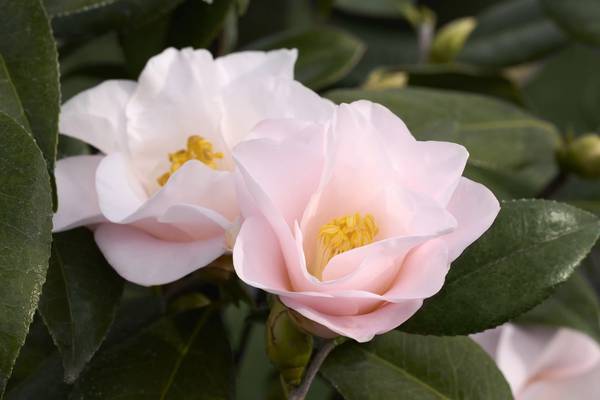
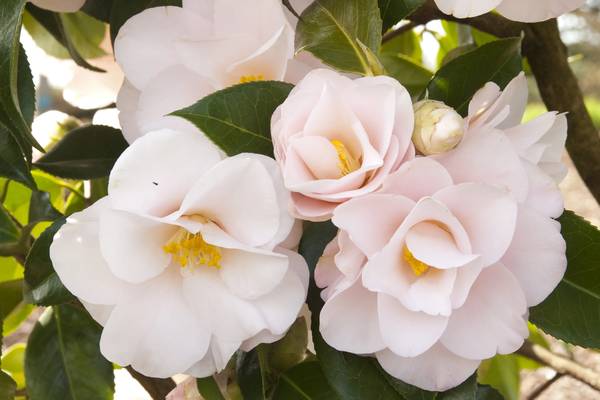
Camellia Magnoliaeflora" refers to a specific variety of Camellia japonica, known for its large, semi-double, blush-pink flowers with wavy petals that resemble magnolia blossoms, offering beautiful winter to spring blooms, thriving in partial shade and acidic, well-drained soil, and growing into an upright evergreen shrub. It's a popular ornamental plant valued for its showy flowers and glossy foliage, needing moderate water and acid-loving fertilizer.
Key Characteristics
Flowers: Pale pink, semi-double, medium to large, with distinctively curled petals.
Bloom Time: Mid-season (winter to early spring).
Foliage: Glossy, dark green, evergreen leaves.
Size: Upright habit, typically reaching 6-8 feet tall and wide.
Light: Prefers morning sun and afternoon shade or full shade.
Soil: Requires rich, acidic, moist, well-drained soil.
Hardiness: Tolerant of cold and deer-resistant.
Growing Tips
Planting: Best planted in fall or early spring in a sheltered spot.
Watering: Keep soil consistently moist, but avoid waterlogging.
Fertilizing: Use an acid-based fertilizer after flowering to support growth.
Mulch: Apply mulch to conserve moisture and protect roots.
Why "Magnoliaeflora"?
The name "Magnoliaeflora" (or Magnolia-flowered) comes from its unique blooms, which have petals that curl and curve, giving them a distinct, magnolia-like appearance. It's also known by its Japanese cultivar name, 'Hagoromo' ("Robe of Feathers").