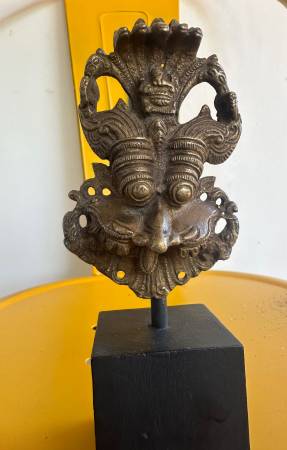
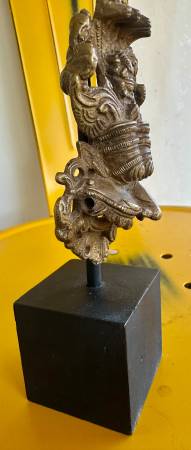
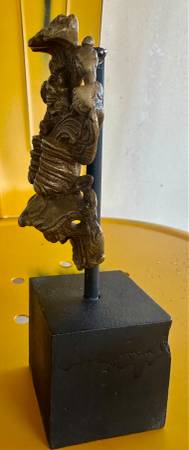
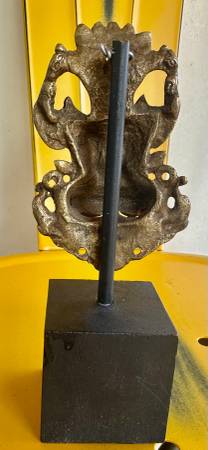
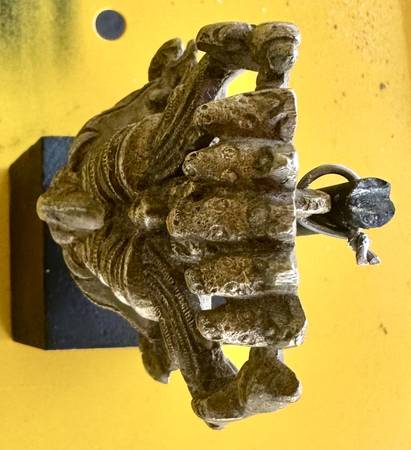
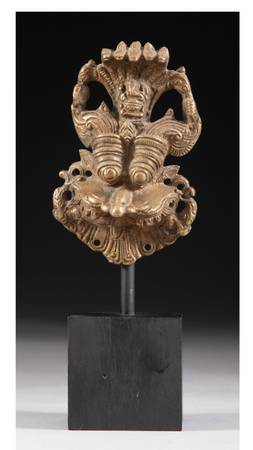
Brass Kirtimukha with Seated Ganesha
on wood Stand
Brass Dragon Face Temple Guardian Metal Decorative Wall Hanging Entry Protect
Brass Yali Face Temple Gaurdian Metal Decorative Wall Hanging Protect Evil’s Eye
History :Yali also known as Vyala or Vidala in Sanskrit) is a mythical creature seen in many Hindu temples, often sculpted onto the pillars. It may be portrayed as part lion, part elephant and part horse, and in similar shapes. Also, it has been sometimes described as a leogryph (part lion and part griffin)with some bird-like features.
Yali is a motif in Indian art and it has been widely used in south Indian sculpture.Descriptions of and references to yalis are very old, but they became prominent in south Indian sculpture in the 16th century. Yalis are believed to be more powerful than the lion/Tiger or the elephant.
Like these other divine creatures of myth, the yali is a symbol of strength and vigilance. In its iconography, the yali takes on numerous forms and personalities. Often depicted on a floral pedestal in temple architecture, it is rendered in dynamic detail—galloping, swirling, prancing, or poised to leap in attack.
From Kumbakonam in Tamil Nadu, South India.
Approximate Dimensions: 4 x 2-3/4 x 1 inches (work). 7 x 2-3/8 x 2-1/8 inches (overall)
Kirtimukha: A specific motif, often described as a fierce, lion-like face with prominent fangs, bulging eyes, and a wide-open mouth. It is a symbol of Shiva, representing his power and ferocity, and is commonly placed at the top of temple structures or deity images. Kirtimukha is often shown with foliage or strings emerging from its mouth, a visual metaphor for its powerful presence.
Kirtimukha is a specific, leonine representation of a deity's fearsome aspect, often used as a decorative element associated with protection and have fierce appearances in Hindu iconography.